Understanding Worcester's Glacial Geology and Its Impact on Concrete
If you've lived in Worcester for any length of time, you've probably noticed something: the ground here is incredibly hard. Dig down a few feet in your yard, and you'll likely hit solid rock or dense, clay-like soil that feels almost impenetrable. This isn't by accident. Worcester sits in the heart of New England's glacial landscape, shaped by ice sheets that retreated roughly 12,000 years ago.
What they left behind is a complex mix of materials known as glacial till: a dense, unsorted combination of boulders, gravel, sand, and clay. Beneath and around this till, you'll often find ledge (exposed bedrock) and hardpan (compacted clay layers). While this geology makes Worcester a geologically fascinating place, it creates serious challenges for homeowners installing or maintaining Concrete Driveways. The poor drainage characteristics of glacial till, combined with freeze-thaw cycles typical of Massachusetts winters, means that concrete in this region faces pressures that concrete in other parts of the country simply doesn't encounter.
Frost Heave and Ground Movement: The Primary Enemy of Worcester Concrete
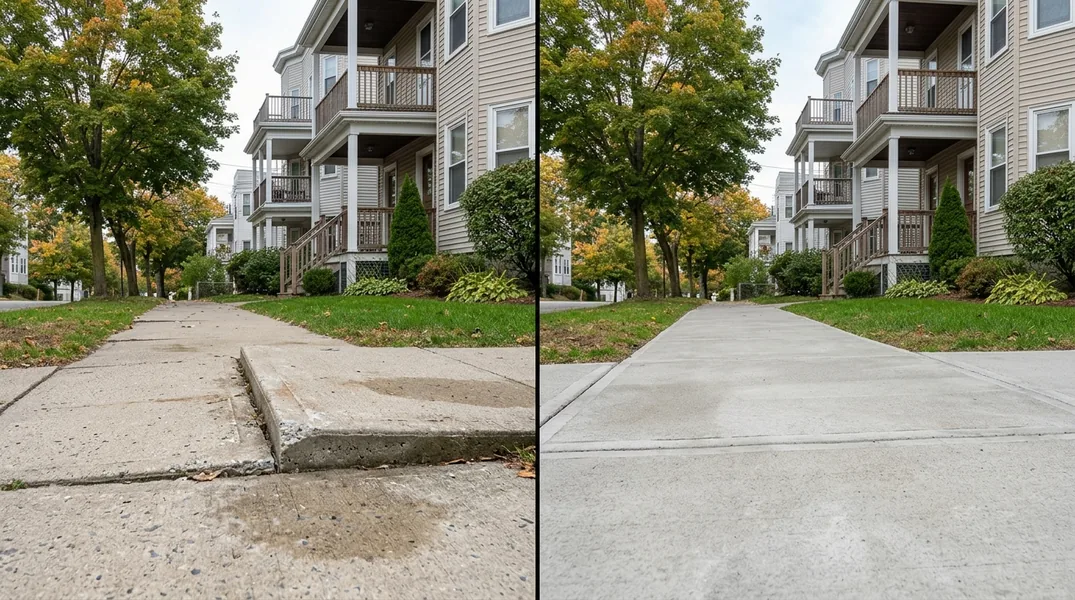
Frost heave is perhaps the single most destructive force acting on concrete in Massachusetts. When water trapped in glacial till and clay-rich soil freezes, it expands. This expansion can lift concrete slabs by several inches over a single winter, creating an uneven surface that's both a tripping hazard and a sign of serious structural problems. In spring, as the ground thaws, the concrete settles back down, but rarely evenly. This constant up-and-down movement stresses the concrete, causing cracks that widen with each seasonal cycle.
The challenge in Worcester is that glacial till and hardpan don't drain water the way sandy or gravelly soil does. Water sits in the soil profile, waiting to freeze. Even if your driveway was installed perfectly, inadequate subsurface drainage means frost heave is almost inevitable. This is why Concrete Repair & Resurfacing is such a common need in the region. Many homeowners find themselves calling for repairs every few years because the underlying ground conditions weren't properly addressed during the initial installation.
Ledge and Hardpan Drainage: Why Proper Site Preparation Matters
Ledge (solid bedrock) and hardpan (dense, impermeable clay) are common obstacles beneath the surface in Worcester's neighborhoods. When a concrete pad is installed directly on or just above these layers, water has nowhere to go. Instead of draining downward, it pools around and beneath your driveway, creating the perfect conditions for frost heave and deterioration. This is why experienced concrete contractors don't just look at the surface of your property. They need to understand what's underneath.
Proper site preparation for Concrete Driveways in Worcester requires removing or breaking up hardpan, installing adequate gravel base courses, and often creating drainage solutions that route water away from the concrete pad. Some installations benefit from a perforated drain pipe placed below the concrete, which channels water to daylight or a dry well. Without these measures, even a well-built concrete slab will eventually fail. This is why the cheapest contractor isn't always the best choice. The difference between a driveway that lasts 15 years and one that lasts 30 years often comes down to whether the builder understood and respected Worcester's unique subsurface conditions.
Common Signs of Frost Heave and Ground Movement Damage
If your driveway or Concrete Patios show certain warning signs, frost heave and poor drainage may already be at work. Look for uneven surfaces where one section of concrete is noticeably higher than an adjacent section. Stair-step cracks that follow the edges of your driveway are a classic indicator. You might also notice that puddles of water sit on your driveway after rain, or that your garage door doesn't close smoothly anymore because the floor has shifted. These aren't cosmetic issues. They're structural red flags that demand attention.
The longer you wait to address these problems, the more expensive repairs become. A small crack can be sealed relatively inexpensively, but once frost heave has lifted a large section of your driveway by several inches, you may need complete replacement. This is why homeowners in Worcester should schedule a professional inspection if they notice any of these signs. Worcester Concrete can assess your driveway's condition and recommend whether Concrete Repair & Resurfacing will solve the problem or whether the underlying drainage issue needs to be addressed first.
Installation Best Practices for Worcester's Climate and Soil Conditions
Installing concrete in Worcester requires a fundamentally different approach than installing it in regions without glacial geology and severe winters. The base preparation is critical. A minimum of four inches of compacted gravel or crushed stone should be placed beneath the concrete, with additional drainage layers if ledge or hardpan is close to the surface. The concrete itself should be air-entrained (containing tiny air bubbles) to resist freeze-thaw damage. Proper slope for drainage, adequate thickness (at least four inches for driveways), and control joints spaced appropriately all contribute to longevity.
Many homeowners don't realize that the quality of the concrete mix matters just as much as the installation technique. A concrete mix designed for Worcester winters is different from a standard mix. It needs to resist salt damage, handle freeze-thaw cycles, and maintain its integrity even when water is present. When you're planning a new driveway or patio project, asking your contractor about their approach to these Worcester-specific challenges is essential. If they don't mention subsurface drainage, soil conditions, or freeze-thaw resistance, that's a warning sign. Contact Worcester Concrete at (508) 859-7140 to discuss your project with professionals who understand the local geology.
When to Call a Professional for Concrete Repair in Worcester
Not every concrete problem requires complete replacement. Sometimes strategic Concrete Repair & Resurfacing can extend your driveway's life by many years. If frost heave has caused minor cracking and unevenness, a concrete contractor can sometimes grind down the high spots, seal cracks, and apply a resurfacing layer that restores functionality. If drainage is the underlying issue, improving grading or installing drainage solutions around the pad can prevent future heave.
However, if your driveway has experienced severe heaving, multiple large cracks, or significant settling, replacement may be the only realistic option. A professional inspection can determine which path makes sense for your situation. The team at Worcester Concrete offers free estimates and can walk you through your options, explaining the pros and cons of repair versus replacement based on your specific conditions. Don't let a damaged driveway linger. The longer you wait, the more structural damage can spread to adjacent areas, including your foundation or garage floor.
Looking for a professional concrete contractor in Worcester? Worcester Concrete responds fast for all your concrete needs.
Get a Free QuoteOur services: Concrete Driveways · Concrete Patios · Stamped & Decorative Concrete