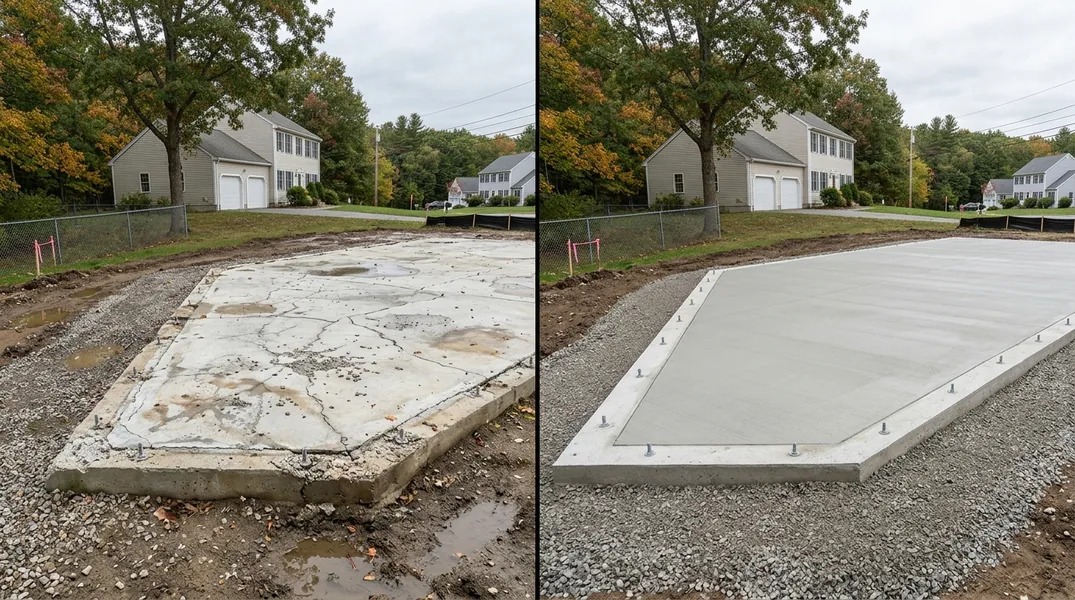
Understanding New Construction Concrete Slabs in Central Massachusetts
Buying a new home in Worcester or the surrounding Central Massachusetts area is exciting, but it comes with significant responsibilities. One of the most critical components of any new construction home is the concrete foundation slab. Unlike older homes where you might inherit decades of history with the foundation, new construction gives you a rare opportunity to evaluate the slab before you take ownership. Understanding what you're looking at and what questions to ask your builder can save you thousands of dollars in repairs down the road.
A concrete slab serves as the base for your entire home. It supports the weight of the structure, provides a level surface, and acts as a barrier against moisture and ground contaminants. In Worcester, where freeze-thaw cycles and seasonal moisture fluctuations are common, the quality of your foundation slab directly impacts the longevity of your home. Before closing on your new construction property, you need to know what to look for, what protections are in place, and what your builder is responsible for if problems arise later.
What to Inspect on Your New Home Foundation Slab
During your final walkthrough before closing, take time to carefully examine the concrete slab. Start by looking for visible cracks. Small hairline cracks (less than 1/8 inch wide) are often normal as concrete cures and settles, but larger cracks, especially those wider than 1/4 inch or running in patterns, can indicate structural issues. Pay attention to whether cracks are isolated or widespread. Walk the perimeter of the slab and check for any signs of settling, heaving, or uneven surfaces that might cause doors and windows to stick or create gaps.
Check for water stains, efflorescence (white powdery deposits), or any evidence of moisture problems. These signs suggest that water is moving through or beneath the slab, which is a serious concern in the New England climate. Look at how the slab transitions to the foundation walls and exterior. There should be proper grading sloping away from the house to direct water away from the foundation. If you notice pooling or areas where water would collect near the house, this is a red flag that should be documented and addressed before you close.
Don't forget to inspect the basement or crawl space if your home has one. Check for standing water, dampness on walls, or musty odors. Test that any sump pump systems are functioning properly. Document everything with photos and notes. If anything concerns you, hire a professional inspector who specializes in foundation issues. Many builders will work with you to address significant problems before closing, but only if you identify them first.
New Home Foundation Warranty: What's Actually Covered
Most builders in Central Massachusetts provide some form of foundation warranty as part of the new home purchase agreement. However, these warranties vary significantly in scope and duration. A typical new home foundation warranty might cover structural defects for 10 years from the date of closing, but many warranties exclude issues related to normal settling, minor cracks, or water infiltration unless it's deemed a structural failure. It's critical that you read your warranty documentation carefully and understand exactly what is and isn't covered before you sign closing papers.
Some warranties distinguish between cosmetic issues and structural problems. A small crack in the slab might be considered cosmetic and not covered, while a crack that's actively leaking water or causing floors to become uneven might be structural. Ask your builder to define these terms in writing. Also clarify the timeline for making claims. Many warranties require you to report issues within a specific window, sometimes as short as 30 days after closing. If you discover a problem six months later, you might find that your warranty claim is rejected because you missed the notification deadline.
Request a copy of the builder's warranty document at least a few days before closing so you can review it with a real estate attorney if needed. Ask specific questions about what happens if foundation problems develop after the warranty period expires. Understanding these details upfront protects you from expensive surprises later. If the warranty terms seem unclear or overly restrictive, this is something you can negotiate with the builder before signing.
Builder Foundation Inspection: Hiring a Professional Before Closing
While your real estate agent or home inspector will examine the foundation, consider hiring a structural engineer or foundation specialist to conduct a dedicated builder foundation inspection. This is different from a standard home inspection and focuses specifically on the concrete slab, drainage, and any potential foundation issues. A structural engineer has the expertise to identify problems that a general home inspector might miss and can provide professional documentation that carries weight if disputes arise later.
A professional foundation inspection typically costs between 300 and 600 dollars, but it's money well spent on a new construction investment worth hundreds of thousands. The inspector will use moisture meters, check for proper slope and drainage, assess the condition of the concrete, and evaluate how the slab meets the foundation walls and exterior. They'll provide a detailed report with photos and recommendations. If problems are found, you have documentation to present to the builder and leverage to demand repairs or credits before closing.
Schedule this inspection during your final walkthrough period, ideally at least a week before your closing date. This gives you time to address any issues with the builder. Most builders will cooperate because they want to close the sale and move on to the next project. However, they're much less motivated to help after closing papers are signed. Having a professional report also protects you if the builder later claims that any damage you report was caused by you rather than a pre-existing defect.
Common Foundation Problems in New Construction Homes
Even in new construction, foundation problems can occur. One of the most common issues in Central Massachusetts is water infiltration. Poor grading, inadequate drainage systems, or cracks in the slab can allow water to enter basements and crawl spaces. This leads to dampness, mold growth, and structural damage over time. Another frequent problem is improper curing of the concrete. If the slab wasn't given adequate time to cure properly or if it was exposed to freezing temperatures during curing, it may develop premature cracking and weakening.
Settling cracks are normal to some degree, but excessive or uneven settling can indicate that the soil beneath the slab wasn't properly compacted or that there are underlying soil stability issues. In areas with clay soil, which is common in Worcester, expansive soil movement can cause heaving or cracking. Improper construction techniques, such as inadequate reinforcement or poor concrete mix design for New England's climate, can also lead to problems. If you notice any of these issues during your inspection, document them thoroughly and get professional opinions before closing.
Protecting Your Investment After Closing
Once you've closed on your new home and addressed any pre-closing foundation concerns, your responsibility for maintenance begins. Keep gutters and downspouts clean so water drains properly away from the house. Maintain proper grading around the foundation and ensure that landscaping doesn't trap moisture against the slab. Monitor your slab over the first year and watch for new cracks or signs of water problems. Some settling and minor cracking may occur during the first year as the home fully settles, but significant changes should be documented and reported to your builder within your warranty period.
If you need repairs to your concrete slab or surrounding concrete surfaces like Concrete Driveways or Concrete Patios, consider working with a local company that understands Central Massachusetts conditions. For Concrete Repair & Resurfacing needs, Worcester Concrete has the expertise to address issues properly. Keep records of all maintenance and repairs. This documentation protects your warranty claims and helps preserve your home's value.
If you have questions about your foundation or need professional guidance on concrete issues related to your new home, Worcester Concrete is here to help. Call us at (508) 859-7140 or request a free estimate to discuss your specific situation. We serve the Worcester area and understand the unique challenges that new construction homes face in Central Massachusetts.
Looking for a professional concrete contractor in Worcester? Worcester Concrete responds fast for all your concrete needs.
Get a Free QuoteOur services: Concrete Driveways · Concrete Patios · Stamped & Decorative Concrete